
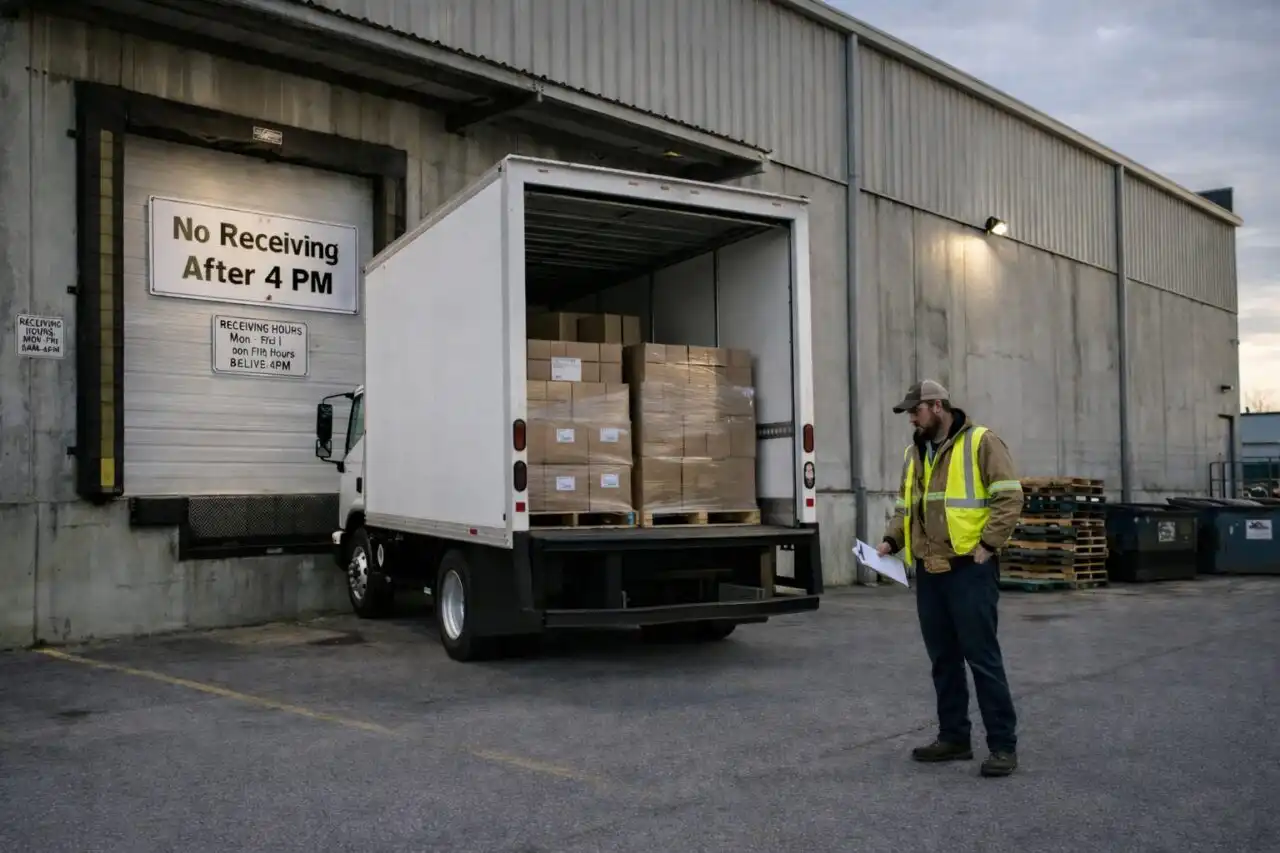
Short term freight storage plays a critical role in preventing delivery delays that occur when freight arrives at a destination that is not ready to receive it. Many delivery failures are not caused by transportation issues, but by timing mismatches between freight arrival and site readiness. When locations lack the staff, space, or equipment needed to unload freight, even on time deliveries can result in missed appointments, refusals, or costly re scheduling.
Receiving environments often operate within narrow windows. Retail locations may only accept freight during specific hours. Job sites may depend on phased access or limited unloading space. Commercial facilities frequently coordinate deliveries around staffing and operational constraints. When freight is forced into delivery outside these conditions, execution breaks down quickly.
Why Freight Gets Delayed Even When Transportation Runs Smoothly
Delivery delays often occur at the final step, not because a truck arrived late, but because the destination was not prepared. Tight receiving windows, limited dock availability, and labor constraints can all prevent freight from being unloaded as planned. When these realities are overlooked, drivers are left waiting or forced to leave with freight still on board.
In these situations, the issue is not speed or capacity. It is alignment. Freight may arrive exactly as scheduled, yet still fail because the location cannot accommodate it at that moment. These mismatches create friction that ripples through schedules, labor planning, and downstream deliveries.
The Role of Short Term Freight Storage in Fixing Timing Mismatches
Short term freight storage changes the dynamic by separating freight arrival from final delivery. Instead of forcing delivery into unprepared locations, freight can be received into storage temporarily and released according to actual site readiness. This approach gives logistics teams the ability to control timing rather than react to constraints at the curb.
By staging inventory in advance, businesses can align deliveries with receiving hours, labor availability, and access conditions. This reduces the likelihood of refused shipments and missed appointments while creating more predictable execution across the delivery network.
Reducing Re Deliveries and Detention Through Better Staging
When freight is staged using short term storage, the need for re deliveries drops significantly. Deliveries are scheduled intentionally rather than forced, which helps prevent situations where drivers arrive only to be turned away. Fewer refusals mean fewer re scheduled routes, lower handling costs, and less administrative overhead.
Detention is also reduced when delivery timing is aligned properly. Drivers spend less time waiting at unprepared locations, and receiving teams are better positioned to unload freight efficiently. This improves overall flow and helps control costs that are often hidden in failed delivery attempts.
Improving Labor Planning and Site Readiness
Short term freight storage also supports better labor planning at delivery locations. When deliveries are scheduled based on readiness rather than arrival pressure, teams can plan staffing levels more accurately. This reduces the need for last minute adjustments, overtime, or rushed unloading that increases risk.
For facilities managing multiple deliveries or limited space, staging freight provides breathing room. It allows teams to receive freight in a controlled sequence rather than all at once, reducing congestion and improving safety and efficiency.
Short Term Storage as a Coordination Tool, Not a Holding Expense
Short term freight storage should not be viewed as an added cost or unnecessary delay. When used strategically, it functions as a coordination tool that protects delivery execution. By buffering timing mismatches, storage prevents larger disruptions that result in missed appointments and operational setbacks.
Rather than holding freight indefinitely, short term storage enables purposeful movement. Freight is received, staged, and released according to plan. This approach supports smoother delivery execution and greater predictability across complex logistics environments.
Supporting Reliable Delivery Across Different Environments
The benefits of short term freight storage apply across a wide range of delivery environments. Retail locations benefit from aligned delivery windows. Job sites gain flexibility as conditions change. Commercial facilities reduce congestion and improve receiving efficiency.
In each case, the ability to control timing is what drives better outcomes. Short term storage provides that control by allowing freight arrival and delivery to operate on separate but coordinated schedules.
The Bottom Line on Short Term Freight Storage
Delivery delays and failed appointments are often the result of timing mismatches rather than transportation issues. When freight is forced into delivery before a location is ready, disruptions are almost inevitable. Short term freight storage solves this problem by creating a buffer that aligns freight movement with real world readiness.
By staging inventory temporarily, businesses reduce re deliveries, minimize detention, and improve labor planning. More importantly, they gain predictability. For organizations that value consistent execution and cost control, short term freight storage is not just a convenience. It is a practical solution that keeps deliveries on schedule and operations running smoothly.
Contact Comet Delivery
Short term freight storage is most effective when it is used to correct timing mismatches, not simply to hold freight. Comet Delivery supports businesses by providing warehousing solutions that allow freight to be received when it arrives and released according to actual site readiness, reducing missed appointments, detention, and unnecessary re deliveries.
Our logistics specialists stay actively involved from inbound receipt through final delivery, coordinating timing and providing real time updates through direct communication with drivers. This hands on coordination helps businesses stage freight intentionally, align deliveries with receiving windows, and avoid last minute disruptions that impact execution.
If your operations are impacted by tight receiving windows, missed appointments, or repeated re deliveries, call us today at 305-591-2262 to speak with a Comet Delivery logistics specialist about how short term freight storage can support smoother execution.
