
When a shipment matters, how it travels matters just as much as when it arrives. Most freight in Florida moves on shared trucks, riding alongside other companies’ goods and stopping at terminals along the way. That model works for some loads, but it quietly adds risk, handling, and uncertainty to others. For businesses that cannot afford a missed window or a damaged pallet, the difference between shared freight and dedicated delivery is the difference between hoping a shipment arrives clean and on time and knowing it will.
This guide breaks down what shared freight really involves, what dedicated delivery changes, and how to tell which one your shipment needs.
What Shared Freight Actually Means
Shared freight, most often arranged as less-than-truckload service, combines several customers’ shipments on one trailer. Each load is picked up, carried to a terminal, sorted, reloaded, and sometimes transferred again before it reaches its destination. It is an efficient way to move a few pallets when the timing is flexible, and our own less-than-truckload service exists for exactly those situations.
The trade-off is control. Your freight shares space, a schedule, and a route with goods you will never see. Every extra stop and every terminal transfer is another chance for a delay, a mislabel, or a dropped pallet, and none of those touch points are yours to manage.
What Dedicated Delivery Means
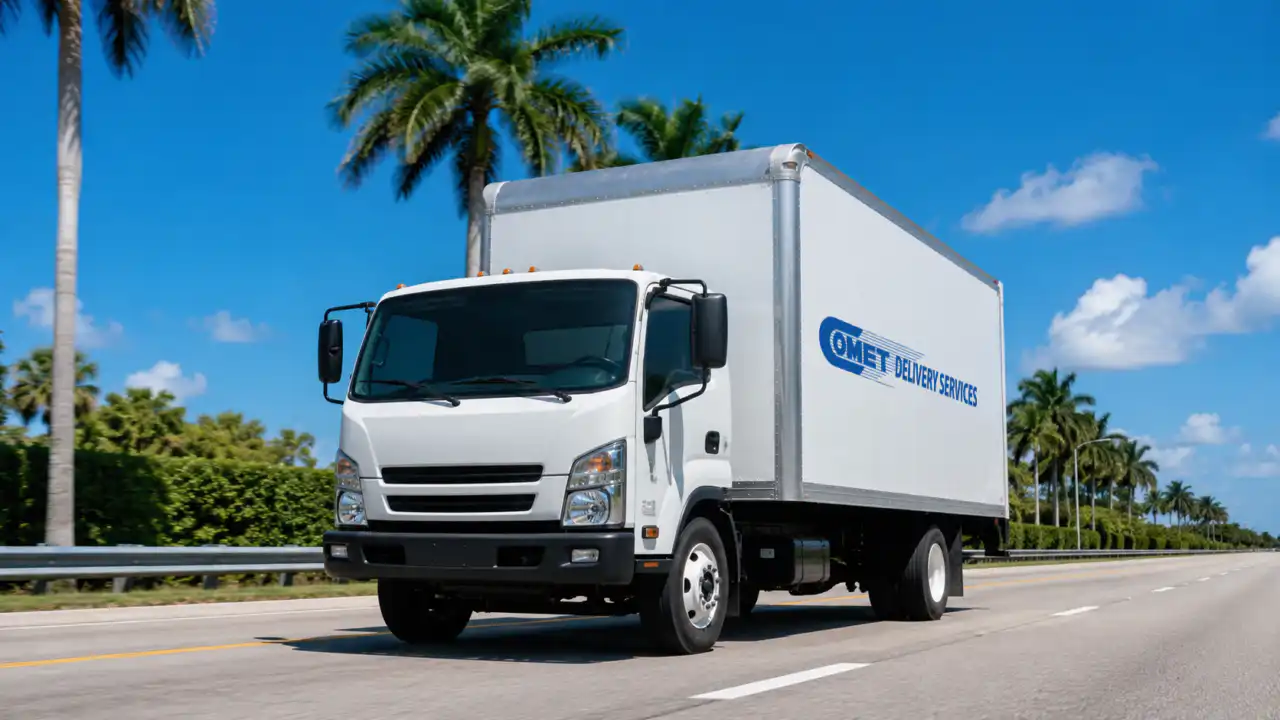
Dedicated delivery is the opposite arrangement. A truck is assigned to your shipment and your shipment alone, carrying it straight from pickup to destination with no commingled freight and no terminal sorting in between. Our dedicated delivery service is built around that single idea: one customer’s freight per truck, handled start to finish by the same team.
That structure removes the variables that cause most shared-freight problems. There is no waiting for a trailer to fill, no detour through a hub, and no handoff to a driver who has never seen your account. The shipment leaves when it is supposed to and arrives the way it left.
Fewer Hands, Fewer Touch Points, Less Damage
Damage in freight is usually a handling problem, not a driving problem. Every time a pallet is lifted, sorted, and reloaded, the odds of a crushed corner or a lost piece climb. A dedicated run cuts those touch points to the essentials: loaded once, secured once, and unloaded once at the destination.
That matters even more for fragile, high-value, or awkward freight that does not survive repeated handling well. When a load stays on the same truck with the same crew, accountability stays in one place too, which makes the rare problem far easier to resolve.
Schedules You Can Build Around
Shared freight runs on the carrier’s schedule, not yours. Dedicated delivery flips that. Because the truck is committed to your shipment, the pickup and delivery times are set around your operation, whether that means an early dock appointment, a tight retail receiving window, or a job site that can only take a delivery at a certain hour.
For shipments that need to move fast, dedicated capacity also pairs naturally with expedited shipping, since there is no terminal network slowing the freight down. The load goes when you need it, on the most direct route available.
When Dedicated Delivery Is the Right Call
Not every shipment needs a dedicated truck, and a good logistics partner will tell you so. Dedicated delivery earns its place when the freight is time-sensitive, when a missed appointment carries a real cost, when the goods are fragile or high in value, or when a delivery has to land at a precise place and time. Retail replenishment, construction materials on a schedule, sensitive equipment, and final last mile deliveries to a customer’s door all tend to fit that profile.
The common thread is consequence. When the cost of a late or damaged delivery is higher than the cost of committing a truck, dedicated delivery is the call.
The Florida Advantage
Distance and traffic make this even more important across Florida. A shared shipment between South Florida and Central Florida can sit at a terminal for hours waiting on a full trailer, while a dedicated run covers the same ground in one clean move. For companies shipping between the Miami area and Orlando, that direct, committed capacity keeps freight on schedule instead of at the mercy of someone else’s route.
Comet keeps trucks and drivers across both regions, so a dedicated shipment is not a special favor arranged weeks out. It is how we are set up to operate every day.
Reliability Your Customers Feel
A delivery is rarely the end of the story. It feeds a retail shelf, a job site, a production line, or a customer waiting at home, and a late or damaged arrival ripples straight into that relationship. Retailers in particular enforce strict receiving windows, and a missed appointment can mean a rejected load, a chargeback, or a second delivery attempt at your expense. Dedicated delivery guards against that by putting the schedule in your control and keeping the freight in one set of hands from dock to destination.
Over time, that consistency turns into something your own customers can count on. When you can promise a delivery window and hit it every time, you are not just moving freight, you are protecting the reputation that brings the next order. A shared trailer can rarely make that promise, because your shipment is only one stop on a route built around other people’s freight. That gap is the quiet reason so many businesses move their most important deliveries to dedicated capacity and, once they see the difference, rarely go back.
Talk to Comet About Dedicated Delivery
If you have a shipment that cannot afford the handling and the guesswork of shared freight, dedicated delivery is worth a conversation. Comet will look at what you are moving, where it needs to go, and when it has to arrive, then tell you honestly whether a dedicated truck is the right fit. Contact us or call 305-591-2262 to talk through your next shipment.
