
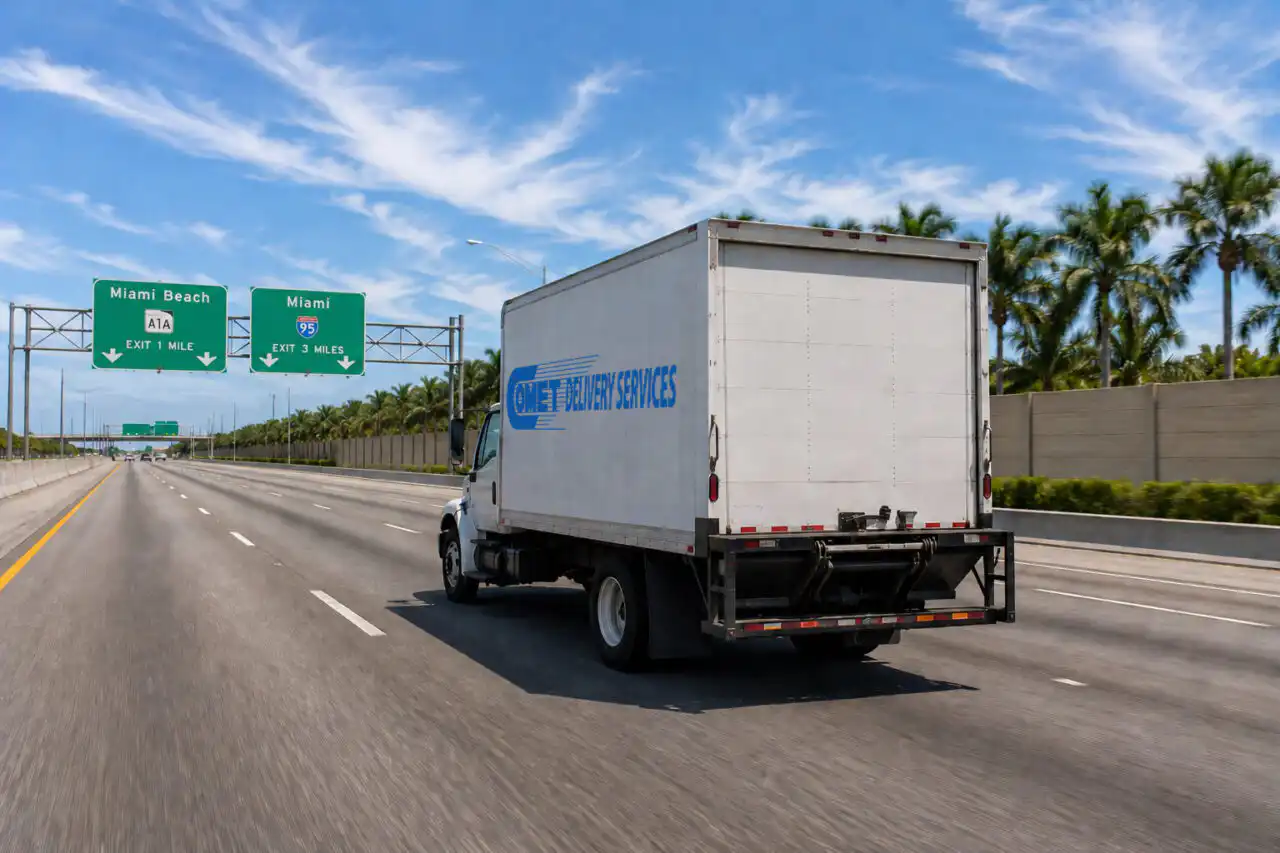
Most logistics conversations focus on price per mile, fuel surcharges, and transit time windows. Those numbers matter, but they leave out the thing that actually determines whether a shipment makes a customer happy or creates a fire your team has to put out: who has control of the load while it is moving. Dedicated delivery is the difference between a shipment that is the only job on a truck and a shipment that is one of many on someone else’s route. For South Florida shippers, that distinction shows up every week in missed windows, damaged freight, and last-minute scrambles that never quite make it onto a billing statement.
Dedicated Delivery Means One Shipment, One Truck
When Comet dispatches a truck for a dedicated delivery, that vehicle is committed to one customer’s freight from pickup to drop. The driver is not picking up two other shipments on the way. The cargo is not pulled off and sorted at a terminal. The route is built around your timeline, not someone else’s efficiency model. That single change in how a load moves is what most shippers notice first when they switch away from less-than-truckload (LTL) or a courier patchwork.
What the Difference Looks Like in Practice
Here is what dedicated delivery changes for a typical Florida shipper, side by side with what LTL or shared-truck service looks like:
- Pickup window: Dedicated arrives in a narrow window you helped set. LTL arrives whenever the route gets to you.
- Handling: Dedicated has one handoff, from your dock to your consignee. LTL touches the freight at every terminal it passes through.
- Transit time: Dedicated moves point to point. LTL moves through a hub network that adds days on common Florida lanes.
- Status updates: Dedicated updates come from the driver on the road. LTL updates come from a tracking number that lags real events.
- Accountability: Dedicated has one carrier responsible for the load. LTL spreads responsibility across multiple touch points, which means no one quite owns the problem when something goes wrong.
The Hidden Costs Dedicated Delivery Removes
LTL looks cheaper on the rate sheet, and for the right kind of shipment, it is. But the line-item rate is only one part of the total cost picture. When a shipment misses its window, the cost is paid in production line downtime, retail shelf gaps, missed event setups, or unhappy end customers writing reviews. When freight is damaged in transit, the cost is paid in returns processing, replacement runs, and time spent on insurance claims that may or may not pay out. When status updates lag reality, the cost is paid in your team’s hours spent on the phone chasing a load instead of doing their actual jobs.
Dedicated delivery does not eliminate those costs entirely, but it removes most of the conditions that cause them. One truck, one driver, one accountable carrier from origin to destination. The shipment is the priority, your timeline drives the route, and the chain of custody is short enough to actually be useful when something needs to be tracked down.
Where Dedicated Delivery Makes the Biggest Difference
Not every shipment needs dedicated service. A pallet of office supplies moving on a flexible timeline is exactly what LTL was built for. But there are specific scenarios where dedicated delivery is the difference between a delivery that lands well and one that does not:
- Time-sensitive press runs and printed materials that have to arrive by a specific drop-off time.
- Medical and pharmaceutical freight that needs minimum handling and a clean chain of custody.
- Manufacturing parts for assembly lines that cannot stop because a pallet is sitting at someone else’s terminal.
- Trade show and event freight with non-negotiable setup windows.
- High-value or fragile goods where every additional handoff is an additional risk.
- Recurring lanes where consistent timing matters more than the lowest per-mile rate.
South Florida shippers in print, medical, manufacturing, and trade show logistics tend to land on dedicated for exactly these reasons. The savings on LTL never quite cover the cost of the missed windows.
Miami to Orlando and Back, on a Single Truck
One of the clearest places dedicated delivery makes a difference is the Miami-Orlando linehaul. The traditional LTL move on that corridor pulls freight through a regional sort, which can add a full day or more to transit and introduces handling at both ends. A dedicated Miami-Orlando move skips the sort, runs straight up the corridor, and arrives on a schedule the shipper helped set. Comet runs this lane regularly, and it is one of the most-requested dedicated services we offer because it solves a problem the alternative cannot.
How to Tell If Your Business Should Be on Dedicated
If any of the following sound familiar, dedicated delivery is probably worth pricing out against your current model:
- You are paying overtime or losing production hours waiting on inbound freight.
- You spend more time chasing tracking numbers than you should.
- You have had a handling damage claim in the last six months.
- Your end customers complain about delivery experience, not the product.
- You have a recurring lane that LTL keeps mishandling.
- You move time-sensitive freight that cannot afford a missed window.
The right answer is not always dedicated. Sometimes LTL or a courier is genuinely the better fit for the lane and the shipment. But for the cases where dedicated is the right call, the difference shows up immediately, and it is usually the difference between freight that creates problems and freight that simply arrives.
Talk to Comet About a Dedicated Move
If you want to see how dedicated delivery would price out against what you are doing now, contact our Miami operations team at 305-591-2262 or learn more on our Dedicated Delivery Service page. We have run dedicated freight for South Florida shippers since the company was founded, and we are happy to walk through the math with you on a specific lane or shipment type.
