
Florida freight shipping is one of those topics that confuses operators more than it should. Freight shows up that needs to move and the supplier or 3PL asks whether to send it LTL, partial truckload, or FTL, and the answer is not always obvious — a single pallet is never going FTL, but the line between LTL and partial gets blurry fast. The wrong choice can mean overpaying for empty space, underbooking and risking damage, or hitting transit times that do not match the customer expectation.
This Florida freight shipping guide breaks down the three options, what each one actually means, and how to decide between them based on the load, the timeline, and the route.
What Is LTL Freight?
LTL stands for Less Than Truckload. It is freight that does not fill a full trailer, so the load shares space with other shippers freight on the same truck. Most LTL shipments fall in the range of one to six pallets, or roughly 150 to 15,000 pounds.
For most small and mid-sized businesses moving freight in Florida, LTL is the default. It is cost-effective because you only pay for the space you use, but the trade-off is that the freight gets handled multiple times during transit, moving through terminals where it is consolidated with other loads. More handling means more chances for damage, freight being forgotten on a dock or lost between terminals, and longer transit times compared to a direct truck.
This option works well for non-fragile palletized goods, regular replenishment runs, and any freight that does not need to arrive on a specific timeline tighter than a day or two.
What Is FTL (Full Truckload)?
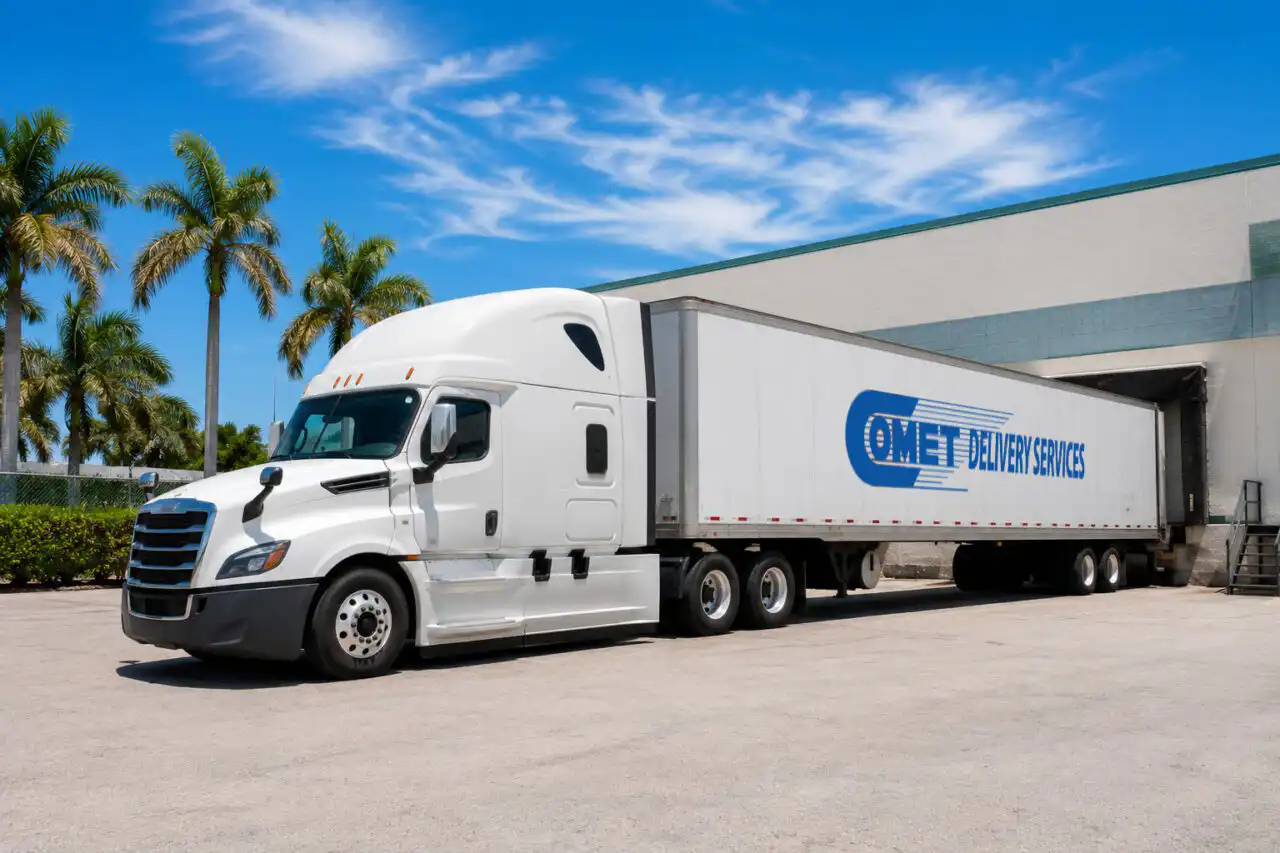
FTL stands for Full Truckload. It is exactly what it sounds like: your freight fills the trailer (or you pay for the trailer regardless), and the truck moves direct from pickup to delivery without stops at terminals to consolidate other shipments.
This option makes sense when the load is large enough to fill a 53-foot trailer, when transit time matters and you cannot risk terminal delays, when the freight is fragile and you want to minimize handling, or when the load is high-value and you want a clean chain of custody.
For Florida shippers, FTL is also the right call for any load moving on a tight schedule. A direct trucking run from Miami to Orlando, or from Tampa to Jacksonville, gets there faster and cleaner than the same load consolidated through an LTL network.
What Is Partial Truckload?
Partial truckload sits in the middle. It is for shipments that are too large for a typical LTL run but not big enough to justify paying for a full trailer. Most partial truckload shipments fall in the range of six to eighteen pallets, or 5,000 to 30,000 pounds.
The key advantage of partial truckload is that the freight stays on the same truck from pickup to delivery, with fewer stops and less handling than LTL, but at a lower price than booking a full FTL trailer. The trade-off is less scheduling flexibility, since the carrier needs to find another partial load going in the same direction to fill the trailer profitably.
How Do I Decide Which One to Use?
A few practical questions cut through the confusion:
How big is the load? One to six pallets typically goes LTL. Six to eighteen pallets is the partial truckload range. Anything bigger, or anything that needs a full trailer for security or handling reasons, is FTL territory.
How tight is the timeline? If transit time matters and you cannot accept terminal delays, FTL gets you there fastest. Partial truckload is a step slower. LTL is the slowest of the three because of consolidation handling.
How fragile is the freight? Fragile or high-value freight benefits from FTL or partial truckload because the load stays on one truck with limited handling. LTL involves multiple cross-dock transfers, which is fine for sturdy palletized goods but adds risk to anything sensitive. Carriers across the industry follow FMCSA cargo securement standards(opens in new tab) regardless of freight type, but reducing handling still cuts risk.
How important is cost? LTL is the cheapest per pallet for small loads. FTL is the cheapest per pallet for large loads. Partial truckload usually wins in the middle range.
How Florida Freight Shipping Works in Practice
Florida geography shapes the answer in ways that other states do not. Material flows in through PortMiami, Port Everglades, and Jacksonville. Distribution corridors run north-south on I-95 and I-75, and east-west on I-4. The major customer markets are concentrated in South Florida, Central Florida, and the I-4 corridor.
That layout means a few things. Shipments moving between Miami and Orlando, for example, often work well as partial truckload or full truckload because the volume between the two cities supports direct lanes. Shipments moving from a single Florida origin to multiple statewide destinations work better as LTL, because the consolidation network reaches everywhere without requiring you to book a dedicated trailer.
Florida shippers also benefit from carriers that operate hubs in both South Florida and Central Florida. A two-hub setup lets a single carrier handle scheduled linehaul between Miami and Orlando, with both LTL and FTL options running on the same lane.
What Does Pricing Look Like?
LTL pricing is calculated based on freight class, weight, dimensions, and origin-to-destination zone. Carriers publish base rates and apply discounts based on the shipper relationship and volume. Accessorial charges (liftgate, residential delivery, inside delivery) add to the base.
FTL pricing is usually quoted as a flat rate for the trailer regardless of how full it is. The cost is higher than LTL on small loads but cheaper per pallet once you cross the breakeven point, which usually sits around eight to ten pallets depending on the lane.
Partial truckload pricing falls between the two and is often quoted by linear footage of trailer space used.
When Does It Make Sense to Consolidate or Cross-Dock?
For Florida shippers running multiple smaller shipments going in the same direction, freight consolidation can collapse several LTL shipments into a single partial or full truckload at lower total cost. This works especially well for retailers or distributors handling supplier-to-store flow.
Cross-docking is the related move: freight arrives at a hub, gets unloaded, sorted, and reloaded onto outbound trucks within hours. It keeps inventory moving without holding it in storage, and it is one of the most cost-effective ways to handle fast-turn freight.
How Comet Handles Florida Freight Shipping
Comet Delivery operates LTL, FTL, and partial truckload service across Florida from facilities in Miami and Orlando, with scheduled linehaul between the two hubs and reach into Broward, Orange, Seminole, and Osceola counties. We help shippers pick the right option for each load rather than defaulting to whichever method is easiest to quote, because the right call depends on the load, the route, and the timeline.
To talk through what your next Florida freight shipping run should look like, contact our logistics team at 305-591-2262.
