
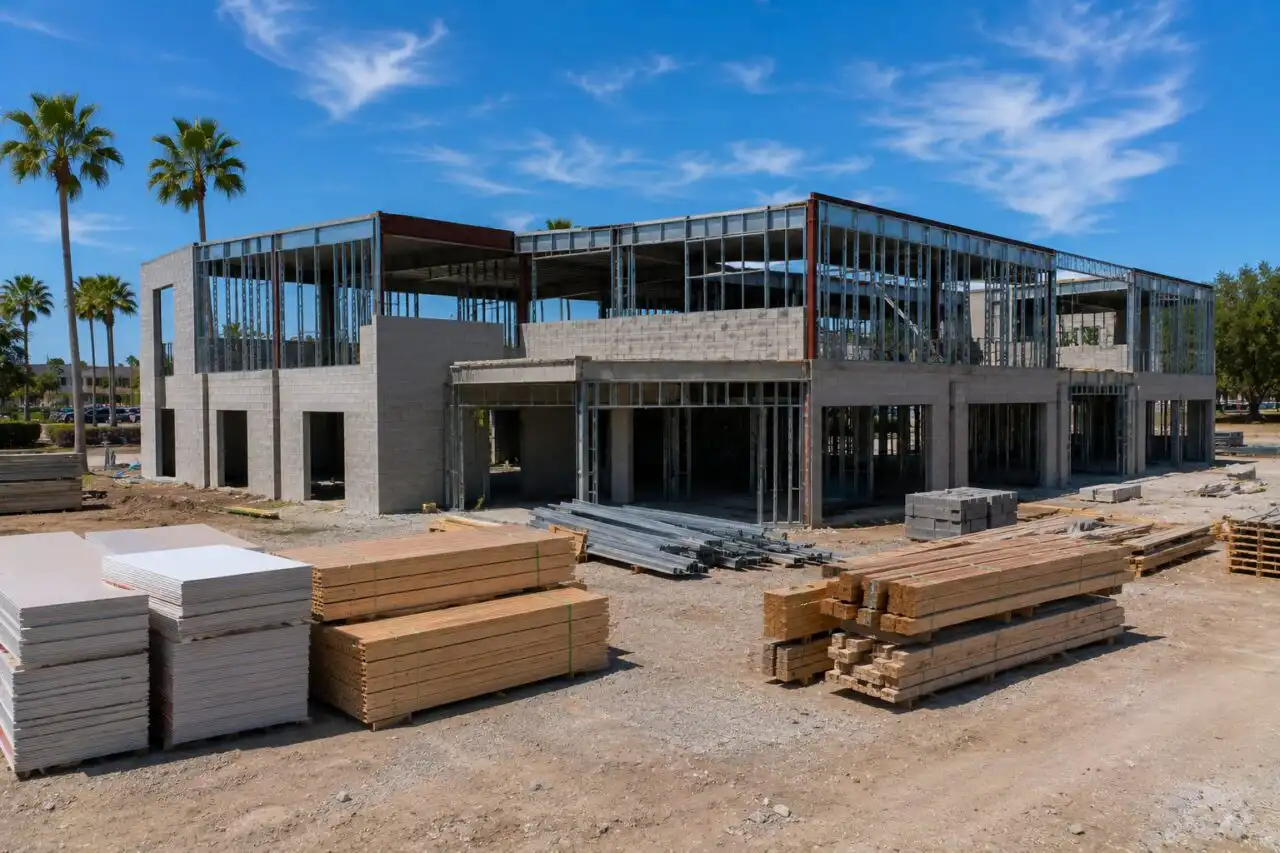
Central Florida is one of the fastest-growing construction markets in the country. New residential developments, healthcare campuses, retail buildouts, and commercial projects are active across Orlando, Lake Nona, Winter Garden, and the surrounding suburbs at a pace that has not slowed in years. Central Florida construction logistics has become a discipline of its own, and the projects that hold their schedule are the ones treating material flow as a planned operation rather than a daily fire drill.
A reliable construction delivery process is one of the most controllable variables on a project. When it works, the schedule holds. When it does not, every other variable starts moving with it.
Why Central Florida Construction Logistics Has Tightened
Orlando growth has changed the way materials move through the region. Projects sit closer together, traffic windows are tighter, and supplier networks now span multiple counties. Five years ago, a contractor might have managed deliveries through their own pickup truck and a few supplier runs. Today, with multiple subcontractors, inspection windows, and scheduled trade sequences, that approach leaves too many gaps.
The construction sites that stay on schedule are the ones treating material flow as a planned operation rather than a daily fire drill. That means scheduled deliveries timed to trade sequences, equipment matched to site conditions, and a delivery partner that communicates in real time when something shifts.
What Makes Construction Delivery Different From Standard Freight
A standard freight delivery answers two questions: where is it going, and when is it expected. A construction delivery answers a longer list. Which entrance is open today. Which trades are working in the staging area. Whether a forklift is on site or the load needs to come off a liftgate-equipped truck at ground level, since most construction sites do not have a dock. What time the inspection is scheduled and whether the material has to be on site before it.
A standard carrier hits the address. A construction-aware carrier hits the address at the right time, with the right equipment, in coordination with the people who need the load. That difference looks small in the abstract. On a real Orlando job site, it is the difference between a productive day and a half-day of standby labor.
The Services Central Florida Contractors Rely On Most
A few delivery types come up over and over on Central Florida projects:
Same-day and hot shot runs for trades that show up to find a critical material missing. The cost of standby labor adds up quickly, and a same-day run gets the day moving again before the schedule slips.
Liftgate and inside delivery for the reality of most construction sites, which do not have a working dock. A liftgate-equipped truck, paired with a forklift on site when needed, makes ground-level drops cleanly without floor or wall damage.
Flatbed loads for steel, lumber, and oversized materials that have to come off the side. Sending the wrong vehicle is one of the most common reasons an on-time arrival turns into an off-time delivery.
Multi-site coordination for contractors managing more than one active project. Routing materials across Orange, Seminole, and Osceola counties from a single dispatch point cuts coordination overhead and keeps every site on the same playbook.
How Orlando Connects to a Statewide Construction Supply Chain
Central Florida sits at the center of the state, with material flows coming in from PortMiami, Port Everglades, and Jacksonville on the freight side, and from suppliers across the Southeast on the road side. For Orlando contractors sourcing materials through Florida southern ports, a Miami-to-Orlando linehaul service shortens the gap between port arrival and job site readiness. For materials staged before a project phase begins, warehousing in or near Orlando provides a controlled release point so product does not pile up on a site before crews are ready for it.
The hub model matters. Contractors working multi-phase projects benefit from being able to land materials in Orlando, hold them under climate-controlled storage, and release them on the date the schedule actually calls for. That keeps sites clean, reduces damage risk, and gives project managers one fewer logistics problem to chase down.
What to Look For in a Central Florida Construction Logistics Partner
Four things separate a delivery partner that fits a construction operation from one that does not:
Local knowledge. Drivers who know how Orlando traffic moves through the day, where the active growth corridors are, and how site access shifts during a project are faster and cleaner than drivers running a generic route plan.
Fleet flexibility. Box trucks for general material, liftgates for no-dock sites, flatbeds for oversized loads. A partner that runs only one type of truck will leave you stranded on the others.
Proactive communication. Site conditions change. A gate code shifts, a trade is delayed, an inspection moves. The partner that calls you before the truck rolls is the one keeping the project on track.
Statewide reach. Central Florida materials often originate elsewhere in the state. A partner with both Orlando and South Florida coverage moves freight end-to-end without handoffs that introduce delays.
The Cost of an Unreliable Delivery Partner
A late or missed delivery on a construction site is never just an inconvenience. Crews stand by on the clock. Subcontractors get pushed to different phases. Inspection timelines slip. Project completion dates move.
These delays compound. A missed morning delivery can cascade into a half-day of idle labor and a shifted inspection schedule. Over the life of a project, unreliable deliveries are one of the most controllable sources of cost overruns. Choosing a logistics partner who treats Central Florida construction logistics as their job rather than a side concern removes that variable from the project.
How Comet Supports Central Florida Construction
Comet Delivery operates a dual-hub model with facilities in Orlando and Miami, giving Central Florida contractors a partner that runs the same service standards across both regions. Our fleet includes box trucks, flatbeds, and liftgate-equipped vehicles sized for everything from single-pallet drops to full truckload material runs. Drivers are familiar with active job site environments and follow site-specific safety requirements. Dispatch coordinates with your site supervisor or foreman on access, timing, and unloading conditions before the truck rolls.
For multi-phase or multi-site projects, we plan delivery sequences across the full project calendar rather than handling shipments one at a time. For materials arriving ahead of a project phase, our Orlando warehousing facility provides short-term staging and timed release.
To talk through what a construction delivery plan looks like for your next project, contact our logistics team at 305-591-2262.
