
The week after the holidays, the return counter at a Florida store gets busy in a way the rest of the building is not ready for. Gift returns, wrong sizes, and opened boxes come across the counter all day. The refund takes a minute. Deciding what happens to the product takes much longer, so most of it goes into a carton and then the back room.
That is where retail reverse logistics either works or quietly stops. A returned item is still inventory. Some of it can be sold again at full price, some is owed back to a vendor for credit, and some can only be scrapped. The retailers who recover the most treat returns as freight moving in the other direction, with a pickup schedule, a place to sort, and a plan for every carton.
Why Holiday Returns End Up Stuck in the Back Room
Many retailers stretch their return windows over the holidays, so the wave builds through late December and keeps coming well into January. It lands in the same weeks the store is running clearance, taking in reset freight, and counting inventory, all in a back room that rarely had spare space to begin with.
Returns lose the fight for that space every time. A carton of mixed returns has no delivery appointment and no customer waiting on it, so it gets pushed against a wall while urgent freight moves around it. A few weeks later there are several of those cartons, nobody is sure what is in them, and the staff who would sort them are on the sales floor.
Returned Product Loses Value While It Waits
Much of what comes back after the holidays is seasonal. A sweater or a boxed gift set returned in early January can often go straight back to the floor. The same item found in a carton in March is a clearance item at best.
Credit from vendors runs on a clock too. Return authorizations usually come with deadlines and paperwork requirements, and a damaged unit that misses the window becomes your loss instead of the vendor’s. There is a quieter cost as well. Product in an unsorted carton is also invisible to the shelf. If the system already counts it as on hand, the shelf can sit empty with nothing reordered, and if it does not, the store can reorder an item already sitting in the back room.
What Structured Retail Reverse Logistics Looks Like
A structured return flow breaks the job into stages, each with a schedule and an owner. Returns are picked up from stores on a set cadence, consolidated in one place, and sorted against criteria you set. Sellable product goes back into stock, and the rest is routed to the vendor, to refurbishment, to a secondary channel, or to disposal.
Comet’s reverse logistics service handles the pickup side of that work, including damaged stock headed back for credit or disposal, and documents count and condition at pickup. That record matters. When a vendor questions a credit claim, the paperwork from the store’s dock is what settles it, and it only exists if someone wrote it down before the carton moved.
Picking Up Returns on the Replenishment Run
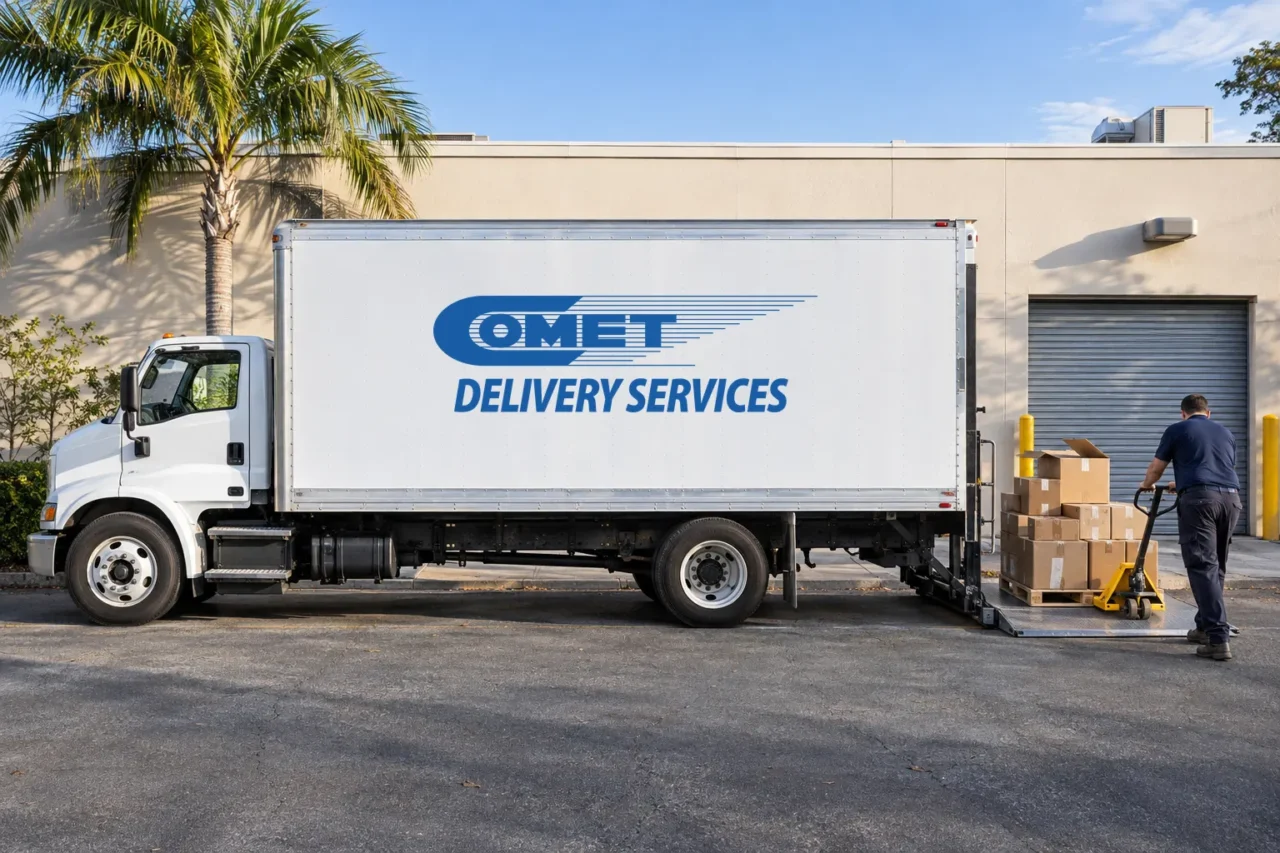
Store managers often push back on return pickups because the volume at each location looks too small to justify a truck. Usually the returns do not need a separate trip. When the load and timing allow, returns can ride back on the same dispatch that drops off the store’s retail replenishment delivery, so a truck that arrives full does not leave empty.
On a dedicated run, the only freight on board is yours, so returns from your stores are not mixed with another shipper’s cartons. A little preparation helps. Stage returns in cartons marked by type, such as damaged and vendor return, before the truck arrives. That rough split takes a minute at the store, and the full grading can wait for the warehouse. For storefronts without a loading dock, plan the pickup around a liftgate truck.
Consolidating Returns From Every Store in One Place
When every store ships returns straight back to every vendor, you end up with a long list of small shipments, separate paperwork for each, and no single view of what is coming back. Nobody notices that one product is being returned at every location.
Comet’s freight consolidation pulls those smaller shipments together, so returns from many stores arrive as one inbound flow you can count and sort in a single place. Vendor returns can then go out as fewer, fuller shipments, and patterns become visible. A product that keeps coming back for the same reason is worth raising with the vendor before the next order is placed.
Sorting Returns at the Warehouse Instead of the Stockroom
The sort is where value is recovered or lost, and a stockroom is a poor place for it. There is no room to lay product out, staff get pulled from customers, and the rules for what counts as resellable change from shift to shift.
Moving the sort into warehousing and distribution space addresses all three. Comet receives the returned freight by the pallet or carton and holds or releases it on your instructions by email, EDI, or phone. Your team or your vendor sets the grading rules and decides where each group of returns goes, whether that is back to stock, back to the vendor, to a refurbisher, a secondary channel, a donation partner, or disposal, and Comet delivers each group there. Grading every return against one set of rules in one place keeps good product out of the dumpster and damaged product off the shelf.
Sending Returns Where They Go Next
Sellable returns are worth the most when they move quickly, and they do not have to go back to the store that took them. A unit returned where an item sells slowly can restock a location where it is selling, and it can travel on the regular replenishment schedule instead of as a separate delivery.
Not everything needs storage on the way. Vendor returns and other freight with a known destination can move through cross-docking, from the inbound dock to the outbound dock with little or no time in storage. If returns taken in at Miami stores belong on Orlando shelves, the Miami to Orlando linehaul carries them north without a second carrier.
Talk to Comet Before the Next Returns Wave
Comet handles retail freight in both directions across Florida, with hubs in Miami and Orlando and dedicated runs that carry one customer’s freight per truck. Return pickups, consolidation, staging, and the run back out to your stores can stay with one carrier, with no broker handing your returns to another company.
The easiest time to set up retail reverse logistics is before the wave starts. Contact us to map out your store list and expected return volume, or see how Comet has served Florida retailers since 1977.
